A year into the second Trump administration, we have an overall playbook for U.S. foreign policy and diplomacy. In substance and form, it is unlike many such strategies in the past. As a strategy, we should expect it to state U.S. objectives and give a road map for reaching those objectives. But we should not expect policy substance to match earlier strategies. On substance, we may expect debate.
The generic questions informing this Salon’s reading of the Strategy include:
Does the Strategy clearly state its goals?
What are the challenges and opportunities that affect success in achieving its goals?
And, how will policies and diplomacy work to secure a desired end state?
The underlying logic of the Strategy will set the stage for assessing the truth claims and value judgements written into the document. How does the Strategy define and refine America First? What place do we take in the world? Who counts as allies and who are our adversaries? How do borders and national sovereignty determine inter-state behavior? What weight does the Strategy give to International Law? When do we go to war and how do we make peace? In the risk/cost/benefit calculation that seems to govern decision making, what are the risks in switching from the post-Cold war paradigm that previous Strategies have followed to something largely new and untested?
The agenda for this Salon is ambitious, but the course of discussion itself will sort out the topics of highest priority to participants in the Salon. In this way, it should identify policy priorities among participants and, possibly, “course corrections” in approaches laid out in the Strategy.
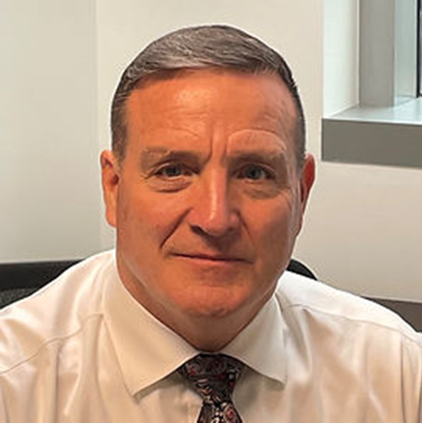
Our guest presenter to the Salon is no stranger to its discussions. Colonel (Ret) John Agoglia led discussion at the Salon of October 28 on "Military Power and the Way of War in Our Time." He’s back for more, and brief bio notes follow:
Colonel (Ret) John Agoglia’s 30 years of experience comprise operations management, war gaming, strategic planning, and multinational negotiations aimed at developing and implementing strategic policies to influence bilateral, multilateral and intra-governmental civilian-military processes and relationships in the Asian-Pacific, Middle Eastern and European regions.
Colonel Agoglia 30 years as a career officer in the U.S. Army extends to critical work in Iraq and Afhangistan. In Iraq, he was involved in developing CENTCOM plans for the invasion of Afghanistan and the Global War on Terror. In May of 2003, Colonel Agoglia served as CENTCOM liaison officer to the U.S. Civil Ambassador in Iraq, Paul Bremer. Earlier he was Director of the Counterinsurgency (COIN) Training Center-Afghanistan, during a 29-month deployment from 2008-2010.
Colonel Agoglia has recently worked with and lead a four-person team at the National Defense University, Ft. McNair, Washington D.C., designing and facilitating table top exercises for the Office of The Under Secretary of Defense for Policy (OSD-P) that focus on emerging complex national security strategic-policy issues. He is a 1980 graduate of the United States Military Academy and holds a master’s degree in Strategic Planning from the School of Advanced Military Studies (SAMS).
Location
Setting: In-Person DACOR Bacon House 1801 F Street, NW Washington, DC 20006 UNITED STATES